Briefly
- Charles Hoskinson mentioned quantum-resistant cryptography is already standardized, however stays too sluggish for widespread use.
- He pointed to DARPA’s quantum benchmarking program as a key reference for when cryptographic danger turns into sensible.
- Hoskinson mentioned Cardano is exploring staged mitigations whereas ready for {hardware} acceleration to mature.
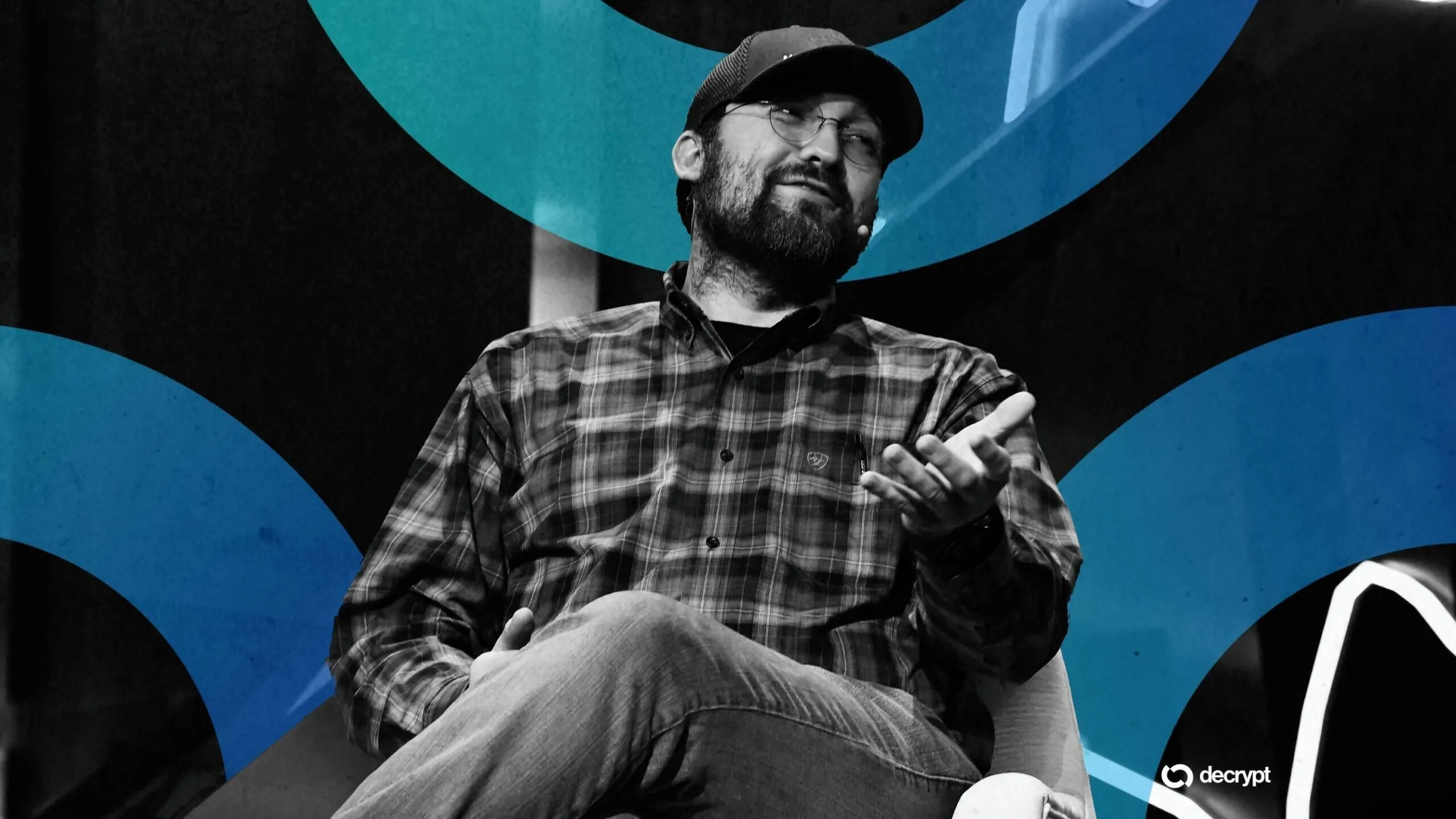
As blockchain builders debate protocol updates to counter attainable future quantum assaults, Cardano founder Charles Hoskinson mentioned the central problem is timing and never what adjustments to make, warning that transferring too quickly might carry a excessive value for blockchain networks.
In response to Hoskinson, the cryptographic instruments wanted to guard blockchains from future quantum assaults exist already, pointing to post-quantum requirements launched by the U.S. Nationwide Institute of Requirements and Expertise in 2024. The issue Hoskinson defined is what it will value if the brand new protocols are applied earlier than miners and validators are prepared.
“Submit-quantum crypto oftentimes it’s about 10 instances slower, 10 instances bigger proof sizes, and 10 instances extra inefficient,” Hoskinson instructed Decrypt. “So should you undertake it, what you’re mainly doing is taking the throughput of your blockchain and decreasing it by slicing off a zero.”
Whereas researchers broadly agree that sufficiently highly effective quantum computer systems might at some point break as we speak’s cryptography, there may be far much less settlement on when that risk turns into actual. Estimates place the arrival of a sensible quantum computing anyplace from a couple of years to greater than a decade away.
Hoskinson mentioned as an alternative of specializing in hype and company timelines when judging how rapidly the risk would possibly arrive, being attentive to DARPA’s Quantum Benchmarking Initiative, which is testing whether or not completely different quantum computing approaches can ship helpful outcomes, could be a greater possibility.
“It’s one of the best impartial, goal benchmark that may be referenced for whether or not quantum computer systems are going to be actual or not, and after they’re going to hit and who’s going to make them,” he mentioned.
DARPA has set 2033 as a goal yr for figuring out whether or not utility-scale quantum computing is possible.
Like most main networks, together with Bitcoin, Ethereum, and Solana, Cardano depends on elliptic-curve cryptography, which might theoretically be damaged by Shor’s algorithm if sufficiently highly effective quantum computer systems emerge. Hoskinson mentioned the trade already is aware of the way to handle that vulnerability, however mentioned the controversy got here right down to a selection between two competing cryptographic approaches.
“There’s two massive bets you may make,” Hoskinson mentioned. “Hashes, which is what Ethereum is making, and lattices, which is what we’re making.”
Hash-based cryptography makes use of cryptographic hash capabilities to create digital signatures which are broadly seen as protected from future quantum assaults. These techniques are easy, well-studied, and conservative by design, however they’re primarily used for signing knowledge and will not be fitted to general-purpose encryption.
Lattice-based cryptography depends on exhausting mathematical issues which are anticipated to stay tough even for quantum computer systems. Lattice cryptography helps not simply digital signatures but in addition encryption, and extra superior cryptographic instruments, which proponents say make it higher fitted to a post-quantum world.
“You are able to do all of your crypto operations in your graphics card, such as you would an AI operation,” he mentioned. “So that you get to reuse tons of of billions of {dollars} of AI computer systems, and also you don't need to construct ASICs to speed up this stuff.”
Hoskinson, nonetheless, didn’t name for a right away protocol-wide change in favor of 1 methodology or one other. As a substitute, he described a staged mitigation strategy. One possibility he famous concerned creating post-quantum-signed checkpoints of Cardano’s ledger historical past utilizing techniques corresponding to Mithril and the privacy-focused Midnight sidechain.
“There are at all times trade-offs with these techniques,” he mentioned. “You possibly can't go from instantaneous finality to probabilistic finality. When you've made that call, you've made that call, and you reside with the implications.”