In short
- The web site for Iran’s Ministry of Defence Export Heart (Mindex) has been up to date to say that it might settle for fee for army gear in crypto.
- Iran has been an enormous adopter of crypto for the evasion of sanctions, however some consultants recommend that the Mindex web site could not facilitate that a lot commerce utilizing cryptocurrencies.
- Whereas crypto could assist present different technique of fee, consultants additionally argue that it could possibly make identification and designation of illicit flows extra simple.
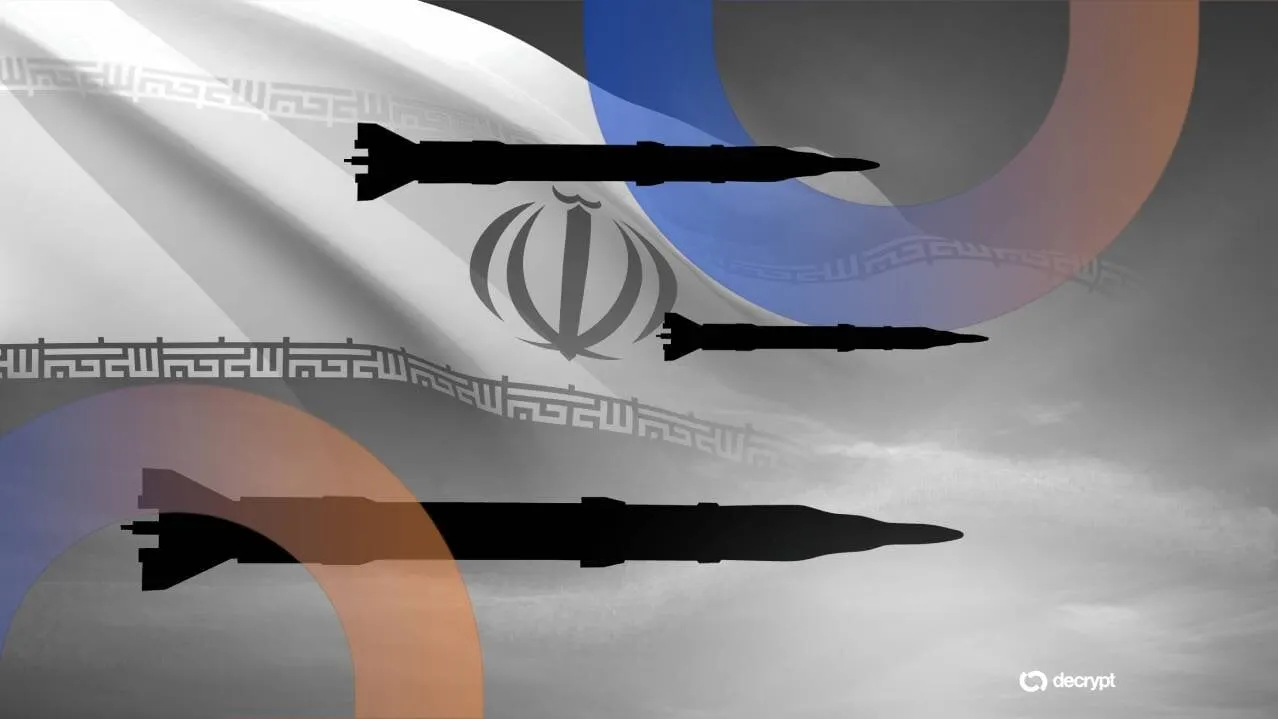
Iran has begun accepting crypto as fee in its gross sales of superior weapons, as a part of ongoing efforts to evade worldwide sanctions.
Mindex, Iran’s Ministry of Defence Export Heart, has up to date the FAQ on its web site to state that accepted fee strategies embrace “the cryptocurrency agreed upon within the contract.”
Merchandise on the market through Mindex embrace rockets, plane, tanks and boats, in addition to weapons, ammunition, information companies, and communication gear.
Iran has been accused of supplying weapons to Russia lately, in addition to to teams which were designated as terrorist organizations by america (e.g. Hezbollah and the Houthis).
It has been sanctioned by america to various levels since 1979, whereas the UK, France and Germany renewed sanctions associated to nuclear proliferation actions in August 2025.
Iran’s obvious embrace of crypto was first reported by the Monetary Instances, which describes the transfer as the primary instance of a nation-state accepting cryptocurrency as fee for army items and companies.
Nevertheless, some safety commentators are skeptical that Iran will obtain important sums of crypto through the Mindex web site, which TRM Labs’ Ari Redbord suggests could have been mischaracterized as a transactional platform.
Chatting with Decrypt, Redbord stated that he wouldn’t agree with any declare that “a closely sanctioned nation-state is brazenly advertising ballistic missiles, drones, warships, and different strategic techniques by way of a public web site—primarily an Amazon-style storefront for Iranian weapons.”
Any such declare raises pink flags for Redbord, largely as a result of website-based gross sales are “merely not how sovereign arms transfers” are typically carried out.
Redbord has reviewed the Mindex web site, and whereas he affirms that it does seem like a official state-linked advertising web site, he highlights the shortage of costs, portions, supply timelines and logistical particulars.
“There isn’t a purchasing cart, checkout course of, order affirmation, or built-in fee infrastructure,” he stated. “There aren’t any cryptocurrency wallets, public keys, sensible contracts, or blockchain rails.”
Redbord notes that there isn’t any ‘purchase’ choice if you happen to click on on an merchandise, with the one obtainable motion being to ‘Add to LOI.’
“Clicking that routed me to a Letter of Intent type requiring in depth self-identification: title, nationality, firm affiliation, contact particulars, referral supply, and references to approvals and safety authorization,” he defined, including that at no level was he proven a quote or a request for any type of fee data.
Fairly than actively shopping for army {hardware}, he means that the positioning’s guests could be submitting themselves for assessment, presumably by the Iran army and/or authorities.
“Cryptocurrency does seem on the positioning, however solely as one merchandise in a listing of doable settlement choices alongside barter preparations and different negotiated phrases,” he added. “The language is persistently conditional, framed as ‘as agreed within the contract.’”
Finally, Redbord argues that Mindex capabilities as “a signaling and consumption mechanism” reasonably than a “crypto-enabled” on-line retail web site, particularly given the truth that strategic arms transfers are often protracted political acts involving licensing, end-user assurances, compliance critiques, logistics, coaching and long-term assist.
Iran and crypto
Whereas it might be questionable as as to if the Mindex web site will now usher in a sudden improve in crypto-based enterprise, there’s little doubt that Iran has been a comparatively early adopter of crypto, and that it’ll proceed to make use of crypto wherever doable.
“Given the sanctions in Iran, cryptocurrency has turn into an alternate fee rail to facilitate cross border commerce, in addition to remittances,” stated Andrew Fierman, the Head of Nationwide Safety Intelligence at Chainalysis.
Fierman advised Decrypt that Iran's Islamic Revolutionary Guard Corps and their proxy networks have lately expanded their use of cryptocurrencies to facilitate cash laundering, illicit oil gross sales and procurement of arms and commodities, with complete (recognized) volumes at present standing at over $2 billion.
He defined, “Between Hezbollah, Hamas, and the Houthis, these organizations are utilizing cryptocurrency at scales beforehand not seen on the blockchain.”
But regardless of Iran’s growing use of crypto, Fierman additionally indicated that blockchain-based cash laundering and sanctions evasion could present alternatives for legislation enforcement.
For example, he highlighted OFAC’s designation final September of two Iranian people and a community of shell firms primarily based in Hong Kong and the UAE.
The designated events had coordinated crypto transactions geared toward laundering the proceeds of round $100 million in oil gross sales, with funds finally being directed to Iran’s Islamic Revolutionary Guard Corps-Quds Power (IRGC-QF) and Ministry of Protection and Armed Forces Logistics (MODAFL).
“The complexity of this community, spanning a number of jurisdictions and using each conventional entrance firms and cryptocurrency, highlights the challenges in detecting and disrupting fashionable sanctions evasion schemes,” he stated. “Nevertheless, it additionally exhibits how the transparency of the blockchain presents unprecedented alternatives to establish and disrupt advanced networks facilitating sanctions evasion within the lots of of thousands and thousands of {dollars}.”