Add on GoogleAdd Decrypt as your most popular supply to see extra of our tales on Google.
In short
- Analysis from blockchain intelligence agency Elliptic signifies that Iran’s central financial institution acquired over $500 million in USDT final 12 months.
- All the recognized USDT has now left Iran-linked wallets, with the central financial institution having used the stablecoin to assist the value of the Iranian rial.
- Elliptic affirms that using stablecoins and blockchain might hinder moderately than assist sanctions evasion.
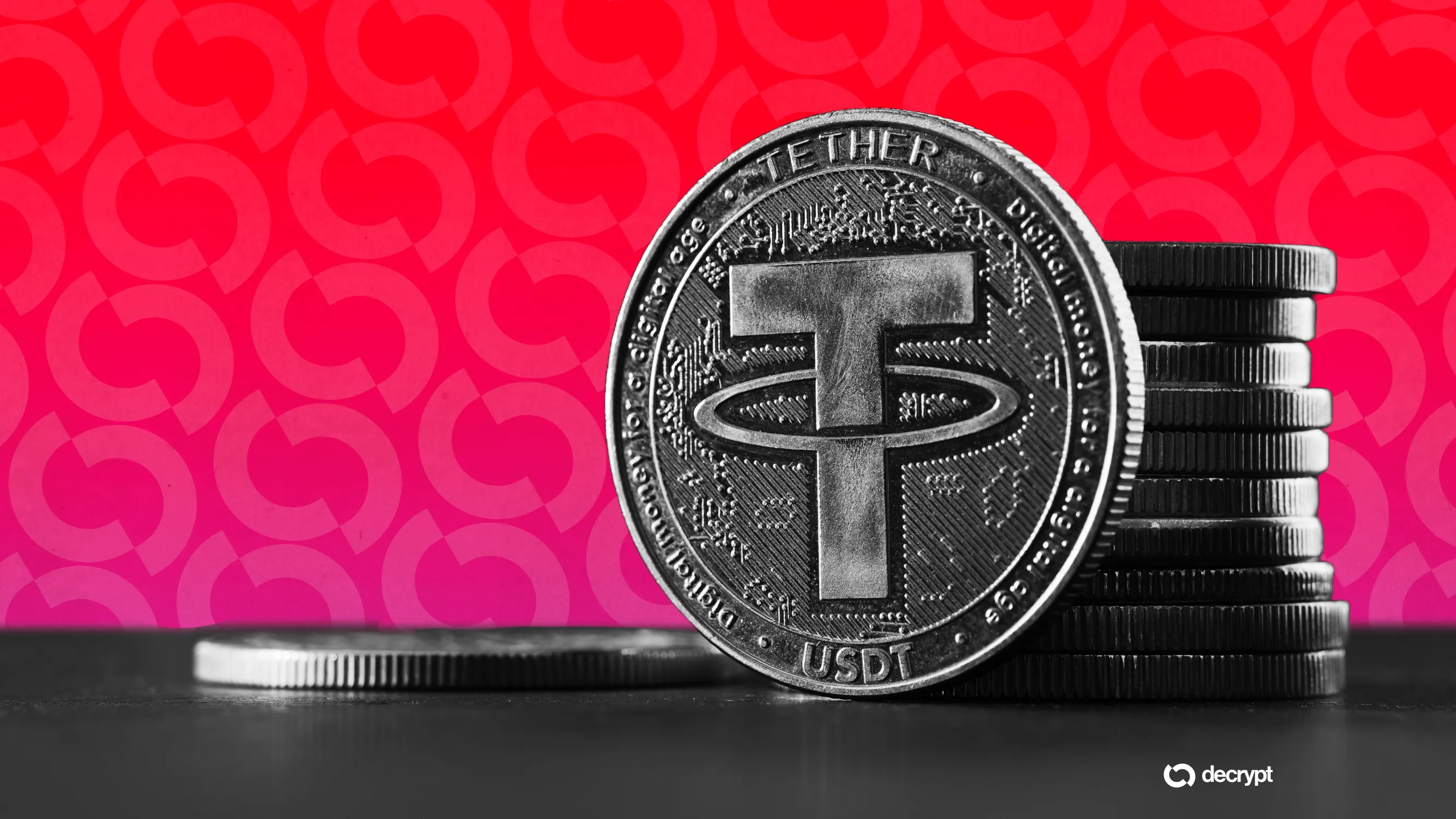
The Central Financial institution of Iran acquired $507 million in Tether’s stablecoin USDT over the previous 12 months, as a part of efforts to shore up the Iranian rial and settle worldwide commerce.
That is based on analysis by UK-based blockchain intelligence agency Elliptic, which has recognized a community of cryptocurrency wallets that Iran’s central financial institution used to obtain the USDT.
🚨 New Elliptic analysis: We have now recognized wallets utilized by Iran's Central Financial institution to amass at the very least $507 million price of cryptoassets.
The findings counsel that the Iranian regime used these cryptoassets to evade sanctions and assist the plummeting worth of Iran's foreign money,… pic.twitter.com/I7NHGO0wtP
— Elliptic (@elliptic) January 21, 2026
Leaked paperwork seen by Elliptic point out that the CBI acquired USDT by way of two purchases in April and Might of final 12 months, making fee in UAE dirhams.
Chatting with Decrypt, Elliptic co-founder and chief scientist Tom Robinson defined that the leaked paperwork element purchases made by way of an entity referred to as Modex, which he suggests could also be a crypto dealer that’s keen to do enterprise with the Iranian authorities.
“We don't have visibility of the opposite sources however different OTC brokers are more likely to be concerned,” he stated.
On the idea of the leads supplied by the leaked paperwork, Elliptic has been in a position to assemble a map of the CBI’s pockets community, which reveals a “systematic” accumulation of USDT amounting to at the very least $507 million.
The weblog warns that this latter determine needs to be considered a “decrease certain,” because it excludes wallets that couldn’t be attributed to the central financial institution with a excessive stage of confidence.
Elliptic’s analysis additionally particulars how the CBI used the USDT as soon as it had acquired it, with most being transferred to Iran's largest change, Nobitex.
Nonetheless, this modified after June 2025, when pro-Israel hackers drained Nobitex of over $90 million in crypto.
After this hack, Elliptic studies that CBI-linked wallets despatched their USDT to “a cross-chain bridge service” that transformed the tokens from TRON-based USDT to Ethereum-based USDT.
The ensuing USDT was then despatched to numerous decentralized exchanges and transformed into different digital belongings, earlier than being moved to different blockchains and to centralized exchanges.
This lasted till the top of 2025, with the $507 million in USDT finally leaving CBI-linked wallets.
“There isn’t any USDT remaining within the wallets we've straight tied to the CBI,” Tom Robinson advised Decrypt. “Nonetheless, the CBI might effectively produce other wallets that we're at present unaware of.”
Stablizing the rial
Elliptic’s weblog additionally goes on to elucidate why the Iranian central financial institution might have needed USDT, with the corporate suggesting that the primary motive was to stabilize the value of the Iranian rial on overseas change markets.
Because the report reads, “The routing of funds to Nobitex signifies a method of injecting US greenback liquidity into the native market to prop up the rial.”
Past that, it’s additionally probably that Iran used its USDT to settle worldwide trades, since sanctions towards the nation forestall it from accessing SWIFT and different monetary settlement infrastructure.
“Past home intervention, the CBI additionally seems to be setting up a ‘sanctions-proof’ banking mechanism that replicates the utility of worldwide greenback accounts,” the weblog states. “By treating USDT as "digital off-book eurodollar accounts", the regime creates a shadow monetary layer able to holding US greenback worth exterior the attain of U.S. authorities.”
Regardless of highlighting Iran’s use of USDT to function financially regardless of sanctions, Elliptic additionally affirms that the transparency and programmability of stablecoins may very well “allow much more highly effective sanctions enforcement.”
Its weblog notes that Tether acted to disable wallets related to the CBI in June of final 12 months, finally freezing round $37 million in USDT.
Chatting with Decrypt, Tether stated that it maintains a zero-tolerance coverage in direction of the illicit use of USDT and its different tokens, and that it really works carefully with regulation enforcement all through the world to establish and freeze belongings related to criminality.
The corporate stated, “So far, Tether has collaborated with greater than 310 regulation enforcement businesses throughout 62 nations and frozen over $3.8 billion in belongings linked to prison exercise.”